
 NeLI Pod
Tom Gricks on Global Aerospace, the Growth of TAR and Generative AI
Listen on Apple Podcasts Listen on SpotifyAbout this episode
Tom Gricks trained and worked as an engineer before law school, and that combination put him at the center of one of eDiscovery's landmark moments: he led the effort that produced Global Aerospace, the first case in the country to approve technology-assisted review over the objection of the other side, while at Schnader. He talks with Daniel Gold and Brandon Mack about how that case came together, why TAR adoption was slower than expected after Judge Peck's decisions, the move from TAR 1.0 to TAR 2.0 and continuous active learning, and where generative AI fits next to the tools that already work.
What we covered
- How an engineering background led him into law and technology
- The story behind Global Aerospace and the first contested approval of TAR
- Why TAR acceptance moved slower than many expected
- The evolution from TAR 1.0 to TAR 2.0 and continuous active learning
- Finding what you do not know is in the collection
- Whether generative AI is the next big thing or hype, and how it fits the toolkit
- Where the work is going, and why he supports NeLI
Full transcript
Transcript of the published episode, edited for transcription errors, with speaker labels added by Gold Standard Leadership.
welcome back to another. NeLI Pod. Podcast today we are joined by the one and only Tom Gricks. Tom. man, it is always a pleasure to see you. Thanks for joining us in the virtual recording studio here today.
Likewise, and I'm sure you are. Appreciate the fact that there's only one so.
It's always do actually.
It's always a pleasure, Daniel, to see you, and Brandon always.
Well for those that are listening. Tom and I have gone quite a ways back, so there is often on and off camera a lot of banter between the both of us, Tom, for those that don't know you. I want to start off just with a little bit of a background about you. You have a really interesting and really great story to tell, and it starts a little bit untraditionally, and when I look back at what you have done, Tom, and your career trajectory. You didn't start off being a poli-sci major and then going right to law school, as some have often done, you actually graduated with a degree in engineering worked in engineering, and then made your way to law school. Can you tell us a little bit about that journey?
Oh, yeah, yeah, like everything with me. It was. It's it's just happenstance that it goes that way. I am not kidding you. I ended up at the Cmu in chemical engineering, simply because the guy that I was following through high school. who I thought was brilliant, went there. And I'm like, well, if he's going to do this, I'm going to try this right? So I go. I end up graduating with a degree in chemical engineering. and I go into work with draveaux engineers. It no longer exists. It was a company in Pittsburgh, an engineering construction firm and honest to goodness, Daniel, I had no desire at all to go to law school. I never even thought about being a lawyer. and then I looked around, and I'm like man.
The only way you get ahead at this place is to have an advanced degree. Right? And I'm I said, I am not going back to engineering school. They are way, too geeky for me, and I looked around. And I'm like, Boy, there are a lot of Mbas. I'm like, you know what? I'll go to law school. I like Perry Mason. Let's give it a go. So that is the amount of thought that went into me going to law school. and that's why that's why I started it. And I and I will tell you this. What I thought is was very interesting is really the difference between being an engineer and being a lawyer. And I've I've explained it this way to people before. When you're an engineer, you know, this 2 plus 2 is always 4, right when you're a lawyer.
2 plus 2 doesn't necessarily mean 4, and, in fact, oftentimes it's not even 2 plus 2. It was so different that it took me a while to ever bring all of that together.
When you say it took you a while to bring it all together. How did it come together? Because I understand, and I think it was a great analogy that the problems in the field of law aren't as discreet as you might see in engineering. But I feel like both professions are about problem solving about essentially engineering a solution to a problem that's presented to you. How did you eventually get those 2 ways of thinking to kind of fall together and mesh to have the career that you do now.
You know, Brandon, I think I think you're exactly right. I think what I really did was came to grips with the fact that I could actually use my engineering techniques to get to legal solutions that I wanted to. Right? I could start to analyze. I could start to analyze problems in an engineering way, saying, This is, you know, I need to know all of the facts. I need to define the problem. and then I need to find a solution to that problem, knowing what I have as tools to do it. So I ended up finally saying, I can actually mold these things together by using my engineering kind of technique to get to a legal solution. And so that's that's really how it came together.
And thankfully, I was. I was this close to quitting after the first semester, this close? After that it was. It was after that point that I realized I could actually make the two of them work together.
So that's really interesting that you found this marriage between engineering and the law. And then you went on to practice. And along comes this technology that exists in the early days, people are calling it different things. It's called computer assisted review. It's called predictive coding called technology Assisted review. And again, for those that may not know who you are. You became quite an icon, quite a figurehead, if you will, for this technology. Do you want to walk into that a little bit and explain what in the world I'm talking about. Here, Tom.
Yeah, I will. And I need to preface that by saying, I want you to understand that I argued the first case in the country.
So so also. So for some context there. So there, there were a couple of cases right in the early days, and when I say a couple I mean literally 2. There was your case, Tom, and there was also Judge Peck, who will also be on NeLI Pod program, and I'll have well, Brandon and I will get, of course, Judge Peck's point of view. But, please, counselor, continue.
What you need to explain to Judge Peck. See, I was the first person to argue against the opposition. When I suggested I wanted to do TAR and I, as I've told Judge Peck he didn't have to argue with anyone. He was a judge. All he had to do was pull out that paper that he had written 10 years ago, and he kept trying to write. and he would then dust it off, and that became the Silver morgue. But Judge Peck doesn't agree with me. He will never agree with me. Feel free. He will have the same type of reaction when you talk to him. But so you gotta love like. When I told you this, all happened. This all is through happenstance. You got to love how this works right?
I'm sitting at Schnader. and we were represented.
Retainers, the law firm that you work for contact. Sorry. Go ahead.
Yep, it was the law firm, and we were representing Upmc. The University of Pittsburgh Medical Center. and there was going to be a big review. and they were technically represented primarily by New York Council. So at that point in time, I had started to look at technologies that would actually save time and money in eDiscovery against just a standard review. Right? So I'm reading all of this stuff. I'm kind of learning it. and it gets suggested by New York Council. In fact, not suggested. They actually basically hired a hundred 50 people to come in and do the review before they even talked to the clients. I mean it was. It was odd. And I went to the lead litigator, our elder statesman. and I, said, Paul, we don't have to do this.
I said. Well, there's absolutely no reason we should throw 150 people at this. We can do a much better job with some of the new technologies, and in that point in time there was more than anything else. It was TAR. One right, and Maura may have was probably out there. Maura and Gordon were probably out there doing their cal work as well, but most.
And so sorry, just for a little more context. Those I don't know. That's more Grossman and Gordon Cormack, who really have said, You know. Back then it was the gold standard, so to speak, no pun intended on understanding what technology review was and the benefits of being able to use it published many, many different articles and worth for those who don't know. It's worth going back through the archive and taking.
Don't agree.
That was.
Agreed. So so anyway, that's how I started getting involved. And through that case I ended up going to conference after conference and learning more and more and more about technology assisted review. And and I got introduced to a lot of folks who were doing technology assisted review at the time. and at the same time I'm practicing right. And I was working on a case with my good friend, John Stern, who's an aviation lawyer, and it dealt with the collapse of the Dulles jet center on 400 million dollars worth of aircraft. and he calls me up one day, and he said he said, you really believe in this technology assisted review stuff? And I said, I do. And he said, You want to do it like, Yeah, you bet I want to do it.
I'm like cool. So I gotta tell you it's it. Nothing ever goes exactly right for me. So I you know, I told John, I said, Okay, I'm gonna call these guys up. I looked at the data, Daniel. I'm sorry I can talk about this forever. But I looked at the data. And most of this stuff was not responsive. Right? We had like 2 million documents at the time, and at the time in 2011, that's a lot of documents, and I looked at it, and I said, There is. There's no reason for us to look at most of these. Let's use TAR. And let's eliminate this and get the documents out there and get this case tried because one of the other things that I did was I practiced in-house for 5 years.
and being in house, I have a real appreciation for budgets and reserves, and nothing can blow up budgets and reserves in a litigation like Ediscovery. So I said, Let's use TAR. So I called up the lawyer for the other side, and I said, Hey, look! I'm telling you there's not much. Here. let's do, TAR. I will not only let you have your nose under the tent, you can sit at the table with me. You just can't look at privileged documents. All right, I said. We'll make decisions. We'll make them together. We'll figure out what's good. We'll let the tool do its job. We'll make sure it worked. We'll validate, and then we'll go forward. And the answer that I got was. you know, when I do reviews I sit down and look at every document.
I just don't feel comfortable with this new technology. Seriously, I mean, seriously, you don't believe that somebody's going to say that right? And I said, well, if you're not gonna if you're not going to let me, I'm going to ask the judge. And so I filed a motion for protective order to permit me to do TAR. That's how that all happened, because I could not in the simplest of all worlds, which is, let's get these documents produced and try the case. His answer was, no. So that's how. That's how we got the global.
When you look back at the global case, what do you look at as sort of its contribution to the field of TAR as we talk about TAR. I know my personal opinion on when I think of global. What's the one thing I take away from that case. But how do you think that it impacted the growth of acceptance of TAR at that time.
You know, Brandon, the answer to that is. if you want to know how I feel it. It did it. I feel it didn't do it the way it was supposed to. Okay, I can tell you this, I looked at that case, and what we ended up doing is at the end of the day, out of a 2 million document set we only had to review 200,000 documents. That was it right? So I was like man. This is absolutely fantastic. This stuff is phenomenal. This is, people are going to jump to be able to do this type of review to the point where I was so worried that people were not going to do a good job of producing documents and weren't going to adequately discharge their rule 11 responsibilities that I wrote.
I wrote the paper with Carl Schinnemann on. You know the implications of Rule 11 on that, because the one thing you know, when you do, TAR is you're leaving responsive documents behind. Right? So you have to be comfortable that you have actually fulfilled all of your obligations for production. And you do that by validation. And so I kind of went around and round about how you can do validation. And I think the nice thing about global is, it gave people a roadmap for things they could do if they wanted to. That was really, I think, what it contributed. It's there. The briefing was all available. You could go in and get it, and you can see how and why to make these arguments about the efficiencies of TAR and the value of TAR.
The results take away. Sorry, Daniel.
There was a lot of criticism, Tom, in the beginning with TAR about how. Yeah, this might be good. But and the but was usually that it's gonna take too long for a partner, a senior partner who has a very high dollar, a high, hourly dollar figure associated with them, and they have to sit there and create a seed set, and they have to sit there. They have to pretend they are a data scientist and basically train this program for you with an engineering background. This was. this is fantastic, right? I got this. But for a lot of folks who are not tech, savvy? Who don't really understand, you know, don't have an engineering background. This was this was all black box, and I don't know it.
I can't understand it. I don't trust it. I'm not going to use it, and it's going to take me too long to just get it up to speed and let this thing hum in order for it to actually prove its overall value. Do you think that some of the reason why that it didn't take off the way that we would have thought, after your decision. After Judge Peck's decision.
I do. I do think it's the general tendency of lawyers to be skeptical about just about anything, and as you are absolutely right as an engineer. It was so easy for me to understand. Because yes, it's it's a black box, right? It is a black box, because stuff happens that you can't see. But you had to understand that everything you do is very, very easy. You just look at documents, that's all you got to do. It's really simple, and at the end of the day you just test it to make sure you did a good enough job. Now that was my concern, to make sure that test was done appropriately to prove that you've done a good enough job so that you're discharging your obligation of reasonable inquiry in a production.
But you know I could I? Because I was an engineer. I had a hard time understanding why people didn't go with this. because it was so simple. And it's always been that simple. You make decisions on documents. They get coded. You test them, Ed. It was that easy lawyers, just I. I think there is a tendency to be risk, averse. and to not trust what you don't know. And and then we got into lots of fights about validation. And does it really work? And do I really see what I'm seeing, and all that kind of stuff? But but I do think that my engineering background made it a lot easier to accept this. I think we were talking about this when actually, when we were preparing for this, I mean.
when I was in engineering school. The one thing that I found out is that you can model anything. In fact. my senior project as a Chem. E in computing was to model the temperature distribution of a cancerous tumor. Given changes in blood flow and changes in external temperature. Right? So I'm like shucks, you can model anything you really can. And this is all about really smart people, not me, but really smart data scientists telling us how to build these models. And it worked. I mean it. It truly did work.
You mentioned, Tom, that at the time that you were dealing with global, and you're preparing for that and arguing that case, you suspect that out there in the ether somewhere where Grossman and Cormac, working on their version of what Tar was going to look like. So can you talk to us a little bit about what that evolution looks like from your perspective, having gone to the match to argue for TAR in the 1.0 iteration. Then, seeing this evolution of the tool or the evolution of the process, what's your perspective on that growth from TAR 1.0 to TAR 2.0.
I think it was. It was fabulous. I mean it was. It was really for me. It was fantastic. It was. It was not easy, though, because when you know, with Tarwon. the difference is this, the difference is very simple. The difference is, you got to review more documents with Tar one than you do with Tar 2. Okay, that is almost a given right? So okay, I'm I'm really looking at Tar 2. And I'm saying, that's not a bad idea. I like what's happening here. But the way Maura and Gordon, the way CAL started it was almost purely relevance feedback. which means nothing more than I'm going to keep giving you things that you said you like. and my concern was always, if I keep pointing the ship just in the direction of the things that I like.
I'm going to miss all these responsive documents over here that I don't know anything about. So I was very concerned with that. Maura and Gordon got past it way back in the day by doing some measure of random sampling and making sure at the end of the process that those documents were being considered. Frankly, I got past it when I got introduced to the folks at Catalyst, to John Trudenek and Dr. Jeremy Pickens, who had created a CAL tool that incorporated an algorithm that would go look for the things you didn't know. I was talking to them about it. And I said, You guys have to understand. You've solved my problem. I said, that was my problem with CAL. And I said, You have solved my problem.
Now that I know that I am actually exploring the entire universe and looking for responsive documents that I may not even know exist today.
And that was.
Sure.
And that right there, Tom, I think, was what I like to call really the next iteration. That was a big difference maker, and what you're talking about right now and correct me if I'm wrong. What you're talking about is contextual diversity, and that is. And so you went over. So you stopped practicing law. You joined John over at Catalyst, joined Dr. Jeremy Pickens, and together you all had created something that the country had not seen before, as it relates to CAL. And this was almost, I would say, an inflection point. Well, when you said that, you guys solve my problem, you're talking about solving for a negative in a sense, right? What? What do we not know within the corpus of data? Is that right?
Yeah, I mean that I was always worried that if you look, the point of creating a model is very simple. The point of creating a model is so that you can have that model look for things that look like that model right? But when you're doing a production, when you're doing a review for production. What you don't know is exactly what you said. It is what you don't know. You don't know what else is out there that has responsiveness has relevance to your case. But it's not something that you've been really looking for. So a pure relevance feedback model. We'll miss it.
Let's see.
And unless you happen to find it, because it'll poke around a little bit. But unless you happen to find it, what's going to happen is, you're going to run out of responsive documents in your review, and when you run out of responsive documents in your review batches, you know, you're pretty much done. That's true. With contextual diversity. Without contextual diversity you could never really be quite sure. So contextual diversity. I was a game changer for me. I thought it was critical.
It was critical for you, not I don't want to call it in an academic sense, but in a real world sense it was critical for you because you understood the problems of the way we had been sampling the way the first versions of CAL really deployed sampling, and where the holes were in that workflow, you know, from your perspective, when you saw that second version, when the contextual diversity was introduced to what a cal workflow looks like. how did you see that changing workflows? Because I think it's easy for all of us to see the big difference between when I had to do manual review to then, when I started to be able to use TAR, then when we start about talk about TAR 1.0 versus TAR 2.0 or CAL.
We can see a big difference in the change in workflow between those 2. But when we're talking about CAL using the different types of sampling. The way in which it enables you to do different things, I don't think is as obvious to people who aren't steeped in what technology assisted review is so from your perspective. How does that? Where does the rubber meet the road on that differentiation? The 2 approaches to CAL.
It's interesting that you ask that because where the rubber meets the road is in my discussions with opposing parties that I'm producing documents to. because their question invariably to me is, Well, how do you know that you get this stuff? How do you know there may be stuff out there. And I said, You don't understand the way this algorithm is written. It is constantly going out for thematic groups and looking at them and trying to find the best document. Putting it automatically in my batch, we used 5%. We could. We could dial that up or down. But now, as soon as I've seen that document. I know that it's either good or bad. So now my model is considering the documents that I didn't know a minute ago, and it's pushing me ever so slightly in a different direction towards something else that I probably need or not.
So I've had conversations with opposing party where parties where they said, Oh, well, you've got to really do an awful lot of validation here and there, and look at all different places, because we never know whether you've seen all this stuff. And I said, the nice part about this one is this workflow. I don't have to do any of that, because it's automatically built in. And I'm able to. When I get through this. I know that the amount of documents that remain on any thematic group is very low. very low. So you know, we still validate. We still do all of that, of course, but at that point I don't have to worry about it. That's what I've talked to folks. I don't have to worry that I'm missing something because it's in there.
When you all published a book called Tar for Smart People. I thought that was no pun intended. I thought it was genius right. It made sense. Obviously I read the book in full disclosure. I did work for catalyst, and when I read that it was part of the reason that I went to catalyst to begin with, was because I'm like these guys. They understand it. They get it. And and I got hooked in and drank the proverbial juice, etc. But do you think, looking back, though similar to the question that Brandon asked you about whether or not you have, you think that the country has finally latched on to even CAL. 2.0 at this point, and this is 14 years later.
I love to hear all the people that say, Oh, don't worry, tars, tars. Accept that. Everybody does it. Yeah, no, they don't. It is still sometimes a fight. I know huge corporations that I've worked with that won't use TAR. and one of the reasons they don't want to use TAR is, they don't want to have a fight with opposing counsel about what's going to be in the Esi protocol. Well, and I'm I'm really. you know me. I'm I'm not opinionated on anything. but the fact is, the reason they don't want to have that discussion is because they just don't understand it. Let me have that discussion, because I can tell people how well this is going to work. and it will solve problems. It will get you, you know, we waste so much money on discovery, you know, it's interesting, because, like, I'm an eDiscovery lawyer, I hate spending money on eDiscovery.
I really think that we need to drive that down, and we'll get to that as well in terms of other ways to drive that down. But it's always been my goal to bring that cost down. and this is a way to do it. and if I you know I was. I was on a podium with on a panel, with a woman from ropes and gray at 1 point, and somebody asked her. What algorithm do you use? And she said, Listen, here's how I think I may have told you this, Daniel, she said. Here's how it works. I take all of my documents, and I spread them out into a big field, and I have a magic cow. and my magic cow steps on every document that I do not need to produce, so I pick up all of the documents that are clean at the end of the day, and I give them to you, and I can prove to you those are all the responsive documents.
Why do you care? Why do you care about my magic cow? And and that's the thing I you know. I know statistics are statistics, and you know I know people worry about that. But in reality, if you go back and look at what we used to do, I don't know about you, you know. I sat there and flipped through folders of documents. And you know, sometimes my review went. There's nothing in there just like it. It didn't look like it was a folder that was gonna matter. So I didn't look right. You got a worse job without the technology than you will get with the technology. And I can show you that. So we shouldn't be fighting about that anymore. Yeah, you gotta. You know, you may want to worry.
Is it a big sample? Is it a little sample? You know that kind of stuff? But otherwise no, it really is a better deal. And that's really what we should be focused on.
You know. Well, industry, adoption aside. Do you think that, CAL, in the 2.0 version, does it still have room to grow? I think one of the challenges that we've got in eDiscovery is that the world of technology and the world of information creation is constantly evolving and constantly growing? Is it leaving some of the tools that we use for CAL behind? Is there still room for CAL to improve on dealing with things like short messages or types of data that don't fit into. You know the typical alphanumeric data that we were using when we first stumbled upon this, you know, 10 years ago. Is there room to grow, or is it time to look somewhere else for a solution?
Well, you know, you can use a combination of the 2. But responding to the first question, the answer is, if Dr. Jeremy Pickens will join me again. There will be growth. I mean. Jeremy and I were working on. You can't imagine the things we were working on. We were working on image TAR. We were working on multimodal Tar. That would look not only at the text, but at the date, at the sender, at the recipient. to start looking at the factors that would influence the model and influence the efficiency of the model. So yeah, you can make it better. There's absolutely no doubt when Jeremy and I worked together. We were constantly making improvements all the way along, anyway. And now we've got new techniques that we could look at.
And and you know, when you when you move into the world of where technology is today, AI, for example. there's still room for TAR is in my world. But yeah, TAR, even putting AI gen AI aside. TAR can improve without a doubt, can do more.
So you said the magic word. So let me let me transition I think it's a good point to bring out, and we've talked about this before as well. Is that TAR. CAL? However, you want to call it. It is a form of artificial intelligence. It does fall under the umbrella of artificial intelligence. So, but you talk about generative AI, and that's obviously what everyone's talking about. When people say AI today. I think it's a pretty fair statement to suggest that they're really talking about generative AI. And when we look at the state of Ediscovery, there's I feel like this is deja vu all over again. It is harkening back to 14 years ago, where all of a sudden everybody is saying, well, this time it's I've got the best.
Llm. No, I have the best Llm. when really the underlying algorithm, the underlying technology, it's really the same. It's utilizing Microsoft. Open AI as an example, right? There's others, obviously. But there's an example. It's then what you do with it from there. And there's a lot of suggestion that well, this is going to be like the greatest thing since sliced bread. Move aside, TAR, move aside, cow, whatever you want to say, and let's bring in generative AI. But it's interesting. I read a recent article that suggested that well, wait a second. Perhaps maybe we should temper that excitement. Somebody referenced. Actually the Gartner Hyatt, the cycles of innovation. And I looked at that. And I thought, Well, that's really interesting. And then when people start getting into the specific document review software that has leveraged it.
There's a lot to be said about how to be able to manipulate it just right. And I almost got the. the little cringe moment where I'm like, Oh, my gosh, this is going to be like TAR 1.0 right? How many? How do I have to train the prompts correctly in order to get the right answers. So when you take a look at this, since you are, you were at this at the beginning, Tom. So when you take a look at generative AI. You see what all the hype is about. What are your thoughts about? Is this really the next iteration? Is this, the next big high business, not for real. What? What are your thoughts.
Look, let me put it to you this way. Every every 45 documents ish that Gen. AI finds saves you an hour's worth of people's time. Right? Is it gonna save you every dime of people's time? I don't know. I doubt it. I expect that what we're gonna end up doing is having some measure of Gen. AI tied with review. I expect that's what's going to happen, at least until we really learn how to refine prompts, although I don't know I don't know where that's going to go. I'm in the process of doing a lot of testing on this to see any number of different things and how they will impact it. I just. I look at Gen. AI, and I believe that it will benefit the process it is, though, Daniel, as you said, it's essentially a TAR one in sheep's clothing.
right? It is, generally speaking, the same thing. You are building a model. It's a different model to approach the problem from a different way. But it is a. It is an effort to build a model. It happens to be a big neural net model, right? That none of us are going to understand. But it's a model, nonetheless. And and you're trying to build that model to reflect a way or to find a way to grab the documents that you need. We'll get there. We'll get there. It's going to take time. It's not today. I mean, I was, I was telling somebody earlier. I read an article where? Where someone said, Oh, the client has saved 70% of its costs using Gen. AI, and you go to.
I started reading it. And the step one apply keywords. And I'm like, Well, that's that's just not fair. Okay, no, you can't take credit for that. So yeah, it'll get there. It's going to take a while. But Brandon, back to some of the stuff that we talked about. You've got people on the other side you're gonna have to deal with on that.
Right? Yeah. I mean, you say, it's going to take a while, and you talk a little bit about some of the barriers we still see just to TAR 1.0 2.0 people who don't want to use it. I agree with you that a lot of it is not understanding it, not understanding how it works, makes you hesitant to jump in with it. Do you think we've learned anything over the last 12 to 15 years in trying to adopt the technology that is TAR, that will help us be better or faster at the adoption of using generative AI as part of our toolkit. Now.
We we have. We have done a good bit to get people to understand validation. I don't think it's a hundred percent of the way, but more than half the people that would have argued against me before were arguing on the issue of validation and happy with it today. So we'll be able to get, I think, using validation. We've already moved much further down the line than we used to be, because you now know what you're seeing in terms of validation, what types of validation approaches, what kinds of numbers, what kinds of analysis need to be done? So I think that's, I think that's going to improve on the acceptance of Gen. AI. Just my, my guess is that will help. We're still going to have folks who are skeptical about it.
And look, there is a reason for it. I was telling somebody this the other day, I said, here's the problem, and you need to understand it from the perspective of the requesting party. because I know. Look, I'm I'm not suggesting that I want people to do this. I just know they will. They are going to want to see my prompts, and I will tell you why this and this isn't rocket science, because you know what my prompt says my prompt says, go find me 80% of the responsive documents, but make sure you never include a hot one.
Right.
And if that's my, if that's my prompt, you've got 80%. Yay. And now look, I don't. I'm not accusing folks of doing that I'm just reflecting on the fact that those who have a concern about validation have that concern. That stuff they really want is going to be missed. We'll get there, we'll get there. It it ain't tomorrow.
Yeah.
So speaking of which, when we look 2025, 2026, etc. One year, 3 years, what does that? What does that look like, because when I see the trajectory of where we are, and you said, You know, we'll get there. I anticipate 2025 there's going to be if people start utilizing it. A lot of discovery motions about your prompts, about what kind of prompt did you use and show me what your prompts are no differently than what we saw with the algorithm, with TAR, or maybe get that magic cow in like you're talking about before. But there's a possibility where you have a world where there's Gen. AI plus cal or cal plus gen AI, or maybe do the trifecta you've got keyboard search. You've got CAL, you've got Gen.
AI. Whatever it is, you're minimizing the amount of overall documents that you've got, and you focus it on the subset of work. If we possibly get there. But where do you think we're going to be in the next one to 3 years? As far as you know, you've seen the trajectory. I mean, you've been at this. Where are we going.
Well, it's it's going to. It's going to head in the direction of focusing on AI generally, right? And the theory that AI is going to be able to identify documents. You, you run the documents through the AI. It gives you the stuff that's responsive. We're going to have people focused on. Prompting. Right? We're going to move in the direction in my world. We move in the direction of building AI together, Gen. AI, together with TAR. so that TAR is always suggesting the next most likely responsive document. But your AI is doing the decision making right. So at the end of the day you have actually reviewed the least number of documents you possibly can, because you get down to the bottom. And you see there's nothing left.
The other thing we're going to do. The other thing we're going to do. There are 2 things that I want to see happen. One is, let's build in the Qc. Loop into that process, so that the feedback that the AI gets is the same feedback that a lawyer would have gotten when they were doing the review memo. So now we're constantly updating the prompt to make it much better at finding those documents. So let's figure out how to build in that Qc loop. And the other thing I want to do. Sorry to the law firms out there who want to spend all their time crafting review memos. But one of the tests that I'm running is, how can I take the complaint? The answer the Rfps and then go to the data set, and my first prompt is going to be.
Hey? Here's a complaint. Give me the top 10 documents that support this and the top 10 that refute it, and then I'm going to go. Here's all my stuff, Mr. AI. Craft me the right prompt to go get these documents. and I just saved. I just saved you a hundred hours of attorney time. Right? So that's where I think we need to be looking at every component of this process and finding out how we optimize it for all of the tools that we have available. and make sure that we're getting. We're squeezing every last ounce out of it to keep the cost down and bring the efficiency up. And heck! Think about this. We may actually get to try cases again. Oh, my gosh! I mean that was my biggest problem.
I like to try cases. I hate discovery.
Yeah.
You just take my documents, you can have them. Let's go try the case.
You know. I think you might have a marketable idea there, Tom, because I don't know that I've ever met an attorney who really loves spending time writing review protocols. So I think you'll save a lot of people a lot of time and headache. And we could. I mean this topic. This has been a fascinating conversation, and we could talk about any one of the things you brought up for another hour just on each of these elements that we're talking about the evolution of TAR. But one of the things that we definitely wanted to hit while we have you is to talk about your involvement with NeLI and the sponsorship of NeLI. You know why, NeLI, the world of Ediscovery and Ediscovery education has a lot of different participants, and there are a lot of conferences that demand time and preparation from all of us.
When we make choices where we're going to spend that time. It means something. So I'm curious for you specifically. Why is NeLI a conference that attracts you and has attracted the sponsors that you've given to NeLI and your ongoing participation.
Well, I mean it really. For me it's pretty simple I've been to. I've been to every conference I've been to just all over the place to different ones. And my own view is that NeLI provides the best substantive material to people who are practicing in this area, and need to know what to do, where to go and how to do it, what tools are available, what you can expect, what you're going to see, the way that process is put, and it's so nice because it's a. It's a small kind of auditorium setting that everybody sits down. Questions. Get asked questions, get answered, and you don't have to go look at different places to go different sessions. We all get to learn together, and that has the benefit, not only of the speaker.
and what that speaker can give to the audience, but what the audience can give back to that speaker, and what the entire group can take away. And I am telling you, in my view, it provides the best substantive material of any conference going today in from my perspective.
That's fantastic. That's quite an endorsement. And, Tom, it really is always a pleasure. Whenever I get to talk to you informally. But here, on the podcast it was really great for you to be able to provide your contributions to all of NeLI Pod listeners and get a better idea about who you are and your thoughts around this space. It really is a pleasure, and we thank you very much, Tom.
Oh, man, you are! You are absolutely pleasure. It's great to be with. Be with both of you guys and have the opportunity to do this. I just hope that I don't send people screaming into the hills. And they never listen to another. NeLI, podcast although they don't have to listen to Judge Peck's.
Well, well, we'll we'll we'll have to let Judge Peck know that as well. So perfect.
It's a ringing endorsement. Give him my best. Give him my best. Will do all right, guys. Thank you.
Thanks. Tom.
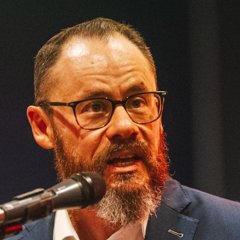
Daniel Gold is an attorney and a Principal at BDO USA, where he leads eDiscovery managed services. He co-hosts the NeLI Pod with Brandon Mack for the National eDiscovery Leadership Institute, hosts BDO's Legal Tech Talk and founded Gold Standard Leadership.
More about DanielGet the next one in your inbox
Daniel Gold writes weekly on leadership, legal technology and eDiscovery.
Subscribe on Substack