
 NeLI Pod
Dr. Maura Grossman on TAR, Generative AI and Deepfake Evidence
Listen on Apple Podcasts Listen on SpotifyAbout this episode
Dr. Maura R. Grossman is a research professor at the David R. Cheriton School of Computer Science at the University of Waterloo, an adjunct professor at Osgoode Hall Law School, an affiliate faculty member of the Vector Institute and principal of Maura Grossman Law in Buffalo, New York. Her research paved the way for technology-assisted review. She tells Daniel Gold and Brandon Mack what surprised her as continuous active learning moved from research into practice, where case law disappointed her, how to evaluate generative AI in eDiscovery with the same rigor, and the evidence rule changes she and Judge Paul Grimm proposed to address deepfakes.
What we covered
- Unanticipated challenges as continuous active learning moved from research to practice
- What disappointed her in the case law on TAR
- Applying the same evaluation to generative AI used in eDiscovery
- Using generative AI alongside CAL instead of replacing it
- Reproducibility and the need to preserve and share how results were produced
- Her proposal with Judge Grimm on Federal Rules of Evidence 901 and 902 for deepfakes
- What competence with this technology looks like, and the legacy she wants
Full transcript
Transcript of the published episode, edited for transcription errors, with speaker labels added by Gold Standard Leadership.
And welcome back to another NeLI Pod podcast. And Brandon, I am so excited to be welcoming to the virtual recording studio today, the one and only Dr. Maura Grossman. Dr. Grossman, welcome to the program.
Thank you for having me. I'm thrilled to be here.
Absolutely. Now, Dr. Grossman, for those that don't know who you are, I'm going to give a very brief blurb as to some of the things that you have done in your career. But certainly, we'd like to get you to expound upon what you have done. We said before the recording, and I'll kind of reiterate it here, is that I have not only read, as Brandon has, all of the studies or almost all of the studies that you put together. I can't necessarily say that I understand everything that you have spoken about. But to the extent that I have taught others about the things that you have discussed in CLEs, that I've given across the country, as Brandon has, has as well. And for those that have been living under a rock, I suppose, over the last 15 or so years, Dr.
Grossman, I would say that you are, in my estimation, a visionary in the world of eDiscovery. The pioneering work that you have done has not only paved the way for countless professionals, but also you've created, inadvertently perhaps, significant revenue. channels for developers, software companies, eDiscovery vendors alike. You are a research professor at the David R. Cheriton School of Computer Science at the University of Waterloo, an adjunct professor at Osgoode Hall Law School, an affiliate faculty member at the Vector Institute, and also principal of Maura Grossman Law and eDiscovery law and consulting firm in Buffalo, New York. I don't think that you do quite enough, Dr. Grossman, but it goes without saying that your groundbreaking research on technology-assisted review, continuous active learning, has been widely cited in case law.
both in the U.S. and abroad. You have served as a court-appointed special master, mediator, and an expert in numerous high-profile cases. Dr. Grossman, have I missed anything about your background that would be significant that we should bring up here.
No, no, no. You got it all.
All right.
Thank you.
You're absolutely welcome, and thank you for joining NeLI Pod. Also, it's worth noting that, Dr. Grossman, you are a fan of the National League of Discovery Leadership Institute. You have been to the conferences over the years. Why don't we start off, as I would like to here, discuss a little bit about this 2011 Richmond Journal of Law and Technology article on Technology Systems Review Continuous Active Learning. It is something that I often turn to and I often talk about. where I believe you have fundamentally shifted the entire universe that we call eDiscovery. When you look back... And I'd love for you to talk about it as well and what it meant to write, et cetera. When you look back, what were some of the unanticipated challenges that emerged as continuous active learning moved from theory, academic in nature, to more practice.
So I used to say that when I first published this paper, perhaps I was a bit naive, but I expected that people would jump up and down and be very excited. And here it was going to save clients a lot of money. And I'm sitting in my office waiting for my big balloon bouquet to show up. And I used to. I used to be able to say it never happened, but it did happen at one conference. Some people surprised me with the balloon bouquet. So it came, but it must have been it was at least 10 or 12 years later. What surprised me was the level of pushback I got at the time. Because if you look at generative AI today and how quickly it's been adopted and it's coming into eDiscovery and you compare that with supervised machine learning in 2010 or 11 or 9 when I was first working in this area, that technology had a long track record.
It had already been shown to work through the TREC legal studies and spam filtering and many other applications. And yet there was such distrust and pushback, some of which was economic. On the one hand, you say I helped software providers, but I also at the time heard lots of law firms. That we're making tremendous. And service providers that were making tremendous amounts of money from the manual review, you know, who were making 15, 20 million just for one second request. So I wasn't prepared for the attacks, both professional and personal. Another thing that sort of I didn't expect and didn't anticipate was that TAR and CAL would be slapped on anything and everything, whether it resembled anything like the research Gordon and I had done.
We later did trademark the terms continuous active learning and CAL. It may have been too late at that point. The. Sort of cat may have been out of the bag, but at that point, we were trying to control how people would use the terms so that something wouldn't be called CAL unless it actually was. So. That surprised me. And, you know, you can come up with a term, and I came up with both technology-assisted review and CAL as terms, but you can't control where they go and what happens to them after they're born. And I guess the third unintended consequence or challenge for me was the battles that ensued over all kinds of things like the seed set needs to be constructed by a senior partner and it can't have any errors in it.
And all kinds of other myths and things that developed around the user. The use of statistics for defensibility of TAR, much of which is not statistically sound at all. But people didn't understand. They just read inside. I want a 95 plus or minus two sample. They have no idea what that means. They think that means the TAR is 95 percent accurate or something like that. And then they would go demand that. So those were the kinds of things that I didn't expect and that were challenging, I think, for me. They still are in some respects. I'm sometimes very sad about the way the case law has developed around some of the TAR use and protocols.
It's interesting to hear your perspective on that, especially the pushback that you received early on. You made the comment that this technology, the machine learning technology that underlies continuous active learning, it's been around for a long time. It's been used in a number of different applications. I feel like people in the legal industry still weren't familiar with. The way that some are with generative AI now, we've got commercial applications, things like. co-pilot that are in our face all the time, so people are getting more familiar with Gen AI more quickly than they did with TAR back then. Even at the time, if we rewind the clock to 2011, I feel like what you were proposing and what you put forth in your article was about a different workflow around the same tools.
And what do you think was the real challenge that the industry had with understanding that, we're not talking about doing something completely new, we're just talking about doing it in a better way.
I think part of it was the myth that if lawyers' eyeballs aren't on a document, you can't do that. You can't make a production without lawyer eyeballs on every single document. And that was a change in the workflow, because now we were saying there are certain documents that will be so unlikely to be relevant that it's not proportionate to waste your time looking at them. And that was, I think, a foreign concept. And again, maybe there was some economic influence there, but that was one thing. I think you're right that with Gen AI, people have been able to put their hands on it and sort of play with it and see how it works in a very different way than when char was first introduced.
And, yeah, you could watch a sort of canned demo, but you really couldn't play with it for an hour or two and have a good sense of what it could do and what it couldn't do. And I think that was hard. And I think, you know, lawyers have gotten a little more used to, especially with the pandemic, you know, getting their hands dirty with technology. But that wasn't the case back in 2009, 2010. Really, most partners and firms, you know, weren't heavy. Into using technology at all.
There is so much, Dr. Grossman, that I want to really back into as well, as Brandon did in your earlier statement. You said something that piqued my interest, and that was a little bit of, if I characterize it correctly, some disappointment in case law and in the direction that case law took. Can you expand on that? What specifically were you a little disappointed about with respect to case law decisions.
A couple of things. We all know that keywords don't particularly work well, especially if you don't test them. So part of the reason for TAR was to remove the necessity to use keywords, but that's not what happened. Almost all of the case law approves of the use of keywords first. But not only does it approve of the use of keywords first. But you don't even have to count it in your recall. We just assume it's perfect, and then we go on and compute the recall of the TAR tool. But even if your keywords were 70% recall, and then your TAR tool comes along and is 70% recall, your overall recall is 49%. That's not acceptable. And that just completely went over people's heads, and they pretended that the keywords were perfect.
So that was one thing. Another thing was the requirement of unprecedented transparency at the beginning, and I blame Andy for that a little bit, Andy Peck. I understand what position he was in. It was new, et cetera, but that language gets quoted now, and I think that slowed adoption a lot because it required people to disclose, Things they didn't have to disclose with manual review, like who was doing the training and how the training was done. And I think that interfered with adoption. And then I think with some of the math in looking at some of the results, and I'm not going to point out specific opinions, at least not in this forum. We can have another conversation. I have been in cases where I have come in and argued two plus two is four.
And I have had an opposing expert that has argued two plus two is six. And a court has ruled two plus two is five. Two plus two is not five. It is not six. It is four. But the courts don't understand the statistics any better than the lawyers sometimes. So they don't understand, for example, and I can't. blame them if it's not explained well to them. That illusion, for example, only tells you part. of the story. It only tells you what you missed. It doesn't tell you anything about what you got and you could have missed everything and not know that. Because if there were 2% documents that were relevant and you get 2% illusion, then that means you got nothing. All of the relevant documents were left behind, but 2% might sound very good, especially if you're dealing with millions of documents.
So some of these things, that's what disappointed me, that lawyers didn't either. defer to people who know about statistics or take it upon themselves to learn it. But you've got opinions that apply statistics incorrectly, protocols that split the baby that make no sense from a statistical standpoint. And then this . . . Basically, massive keywords. We're culling without still without testing and without counting it in to the recall at all.
There are a lot of things in that answer that you just gave about the development of case law and not just case law, but practice around CAL over the last 13, 14 years. And now we're here on the cusp of a new technology being introduced to the legal space. And we're going to see some sort of similar development of how we use this, how we apply it, how courts look at it. But when you think back to all the statistics getting injected, all the workloads getting injected, people talking about how transparent you had to be about the use of CAL, do you foresee that we're going to go through the same sort of evaluation of things in the new age of generative AI being used in eDiscovery.
I think requesting parties are going to insist on seeing the prompts. There will be negotiation of prompts. And frankly, we're going to be back in the same magic voodoo. And we're going to be back in the same magic voodoo. of negotiating prompts without any awareness of how well they'll work because people will think they're so good at it and they're gonna the same way they come up with lists of keywords and think they're infallible they're going to do the same thing with very complicated uh prompts and i. think we're going to have some of the same fights yes i do and that is exactly what.
brandon and i were talking about with another guest and we've had our own conversations about as well it seems like we are we being the legal profession attorneys we are very litigious in nature obviously that we are going to get in our own way of the advancement of a technology that could potentially assist no differently than as you said you know tarring with cal we got in our own way two plus two is equaling six to so many folks and people talking about things they don't really understand, and not grabbing maybe perhaps. Perhaps a legal technology expert that can help assist and augment the use of their technology and speak to the courts on their behalf instead of them speaking. And it almost feels as if this is going to get a whole lot more expensive.
And that, to quote an attorney once who said to me that eDiscovery is more of a sword than a shield because those that understand it will utilize it as a sword against those who do not. And are we going to, is it deja vu all over again, Dr. Grossman.
I think. We're not always rational about this. You know, people said I have to use the keywords first before TAR because the costs of processing and loading this information. is prohibitive. But then 20 attorneys spend six months negotiating the keywords. And I bet you if you looked and I have made this argument, let us compare the cost of just processing and. uploading the data to TAR and just running the TAR and the entire data set with the cost of six months of negotiation and kit reports and all this stuff, rituals that we do with keywords. And I suspect that with any decent TAR tools, since you're not going to have to review documents that are non-responsive or not going to have to review a lot of documents that are non-responsive, you're actually probably ahead if you just ingest the documents.
It's certainly been that way in. my practice when Gordon and I do TAR for people, it's almost always, it is cheaper to, just load the stuff and do it than to negotiate keywords. Plus, you would get a better result. So I don't know that the analysis is always rational. I think right now with the cost, with the context windows and the compute costs, I think doing a responsiveness review of large data sets with generative AI. is prohibitively expensive now. I don't think you can do it on very, very large data sets, especially if you want to redo your prompt a few times and see how it's working now. People have workarounds. They take smaller samples and they practice on the samples, but that's only as good as your sample and you're certainly going to miss things.
So, yeah, I think, unfortunately, we're going to make some of the same mistakes and we already see. Thank you for being here. Because one of the things I think we didn't do well enough at the beginning of TAR was I would have liked us to have spent more time validating the tools and giving good housekeeping seals of approval to tools that worked. And then if you use it properly with somebody who's knowledgeable, then you do a light checkup afterwards to make sure your result to confirm your expectation. But we didn't do that early upfront work. So and now we've done even less of it with the generative AI. So we don't really, you know, I see people out there advertising. They're getting in excess of 90%.
Recall a 90% precision using gen AI. I seriously doubt that's possible. I've been playing with these tools. Gordon and I have been playing with them for years with grad students, and nobody's been able to beat a good CAL system at categorization. I'm not talking about other tasks. You don't use CAL to summarize. You don't use CAL to make a timeline. You don't use CAL to translate. But for a straight categorization task, responsive, this pile's responsive, this pile's not responsive. TAR is a better categorizer. That's not what Gen AI was designed to do. It was designed to generate language. It wasn't designed to categorize. So we haven't – I've seen only a handful of people who have, as opposed to just taking a set that was reviewed by manual reviewers and then sort of backing into a new recall figure based on how many of the documents were reviewed.
The documents they found using Gen AI, that's very different than doing, a back-to-back, same exact request for production, same exact documents, same exact reviewers, CAL versus Gen AI, and the people I've seen who have done that have all said in all honesty that the CAL wins.
That's interesting. I feel like every time we have this new technology injected into the legal space, we immediately declare the death of the old technology, that we've got this new and improved thing, therefore we don't use this other thing anymore. And some of the things that you just said there speak to this, that there is a task that is categorization within eDiscovery and within review, and there are other tasks that Gen AI may be much better than CAL at doing. But where do you see the appropriate sort of division of labor between these two tools where we can have the just speedy and inexpensive resolution of our matters using these two. tools in conjunction rather than thinking about the new replacing what we've been doing with CAL.
I think if you want to investigate a data set and make inquiries of that data set, then probably using Gen AI inquiries will be at least as good, if not better than keywords. But that's an empirical question that we can actually find an answer to. I think it will be strong at translation, better than waiving privilege and putting it into Google Translate. I think it is good for summarization. If you need a summary of certain documents for making timelines for PII detection, I think there are many, many use cases where it can be combined. I'm very excited if people can get it to work. If people can get it to work for creating privilege logs, that would be just amazing. You know, maybe not to do the privilege.
review piece, or maybe a part of it, I'm still not convinced until I see it in a study that it. would be better than TAR for that purpose. But I think we ought to think about what was, generative AI designed for, what does it do well, and eDiscovery, there are a lot of tasks, within eDiscovery, and we should use all the tools in the toolkit, not.
force the hammer to be a screwdriver. So what do you believe, Dr. Grossman, that it really is good for? And I'll back into my question. You look back into the, I think it was in the 1970s, Dr. Gerald Salton is the one who came up with keyword searching algorithm over at Cornell University. And then that was inserted into the LexisNexis Mead machines. Right. And that's what attorneys use. And so attorneys grew up, so to speak, learning how to keyword search. You could blame Dr. Gerald Salton, I guess, I suppose, for that one, and LexisNexis mean machines. But, you know, as we've progressed through time, we get used to something, and this is how we want to be able to use it, right? And so TAR was sort of this wedge of what we're used to, right, and CAL, right, a wedge of what we were used to.
And now, all of a sudden, comes along Gen AI, and it was like, you know, Brandon had a good point there before. I was like, well, okay, well, you know, that was so 15 years ago, right? Now let's just go ahead and use Gen AI for everything. And it's a question that always boggles my mind that I haven't really gotten a great answer on, and that is why is it that Gen AI has picked up steam so fast, so much faster, than any other technology for lawyers? Um, I think since the iPhone and the iPad, uh, I mean, you know, we're so quick to adopt this and I'm going to speak in very general terms, Dr. I don't think a ton of people actually understand what this black box really is or have read the terms and conditions about this black box or understood exactly how to craft a prompt in an eDiscovery application.
But yet here we are. So why is it that we have just jumped right into this and, and, and utilize it? And what do you think it really truly is good for.
It goes back to what we were saying before, as of November, 2022, anybody with a computer and an internet connection could go play with these tools. They were out of the lab, they were out of the service providers, you know, sort of container and, um, people played with them in a way that they really couldn't. I don't think it's, I don't think it's, With TAR. So I think that was one big difference. And I think they're amazing at what they can do with language. I'm still writing my own articles. I don't I continue to write and I continue to write my articles on my own without the use of LLMs. But that doesn't mean that they're not good for that purpose or for other things.
And I think we need to do the testing of the tools and find out what they are good for and what they're not good for. And I think things like translation, summarization, those kinds of tasks, investigative tasks, tasks that really. Yes, but I don't know how you can swear that. If you're using it to find responsive documents, and we know these tools aren't reliable, that if you ask it the same question twice, you get a different answer, how can we trust something that doesn't consistently give you the same answer over time? Or that is so sensitive to the way a prompt is phrased, or that doesn't pick up nuance, so if you're searching in cases, it may find the language you're interested in, but it may not know whether that language is in the main opinion, the dissent, or the concurrence.
And it may present it to you as if it's the opinion when it was the dissent. So. You know, we haven't even talked about hallucinations and things like that, but I just, we haven't done enough homework. I think, to rush in as fast as we're rushing in. I applaud the people who are experimenting, but it's the massive amounts of hype and overselling that frighten me a bit.
Your answer is heading right in the direction of other questions that I wanted to ask. I've been thinking about one of them that you just touched on was when you're using an LLM or using generative AI in any fashion, the same prompt given to the system multiple times can give you a different result. In the context of eDiscovery, and if you're looking at it as a tool that will review a document set and maybe categorize a document set based on a prompt that you give it, if you can't replicate those results from one iteration to the next iteration using these tools, what kind of challenges does that present to the industry? And what has to now be preserved? How much of my workflow do I have to be able to tell you?
Things like, here's the exact text of my prompt. Here's the version I was using when I ran it. Here's the... output look like? Does it start to cause us problems and costs on the side of preserving and sharing all that information because of the fact that we can't replicate easily results.
So I wrote a paper, you probably haven't seen this one, maybe a year or two ago, where I proposed, Gordon Cormack and I proposed the following. We said instead of getting, absolutely obsessed with recall as a number, we should look at the following. If my TAR tool is, if I take a QC reviewer and they agree with the decisions of my TAR tool. as well or better than the decisions with a random reviewer, then what's the problem? Because if I had humans review. the whole thing. My QC person is agreeing with the TAR more than they would have agreed with a bunch of reviewers. So we do all these Venn diagrams, and we show how you can show that. your TAR tool not only is better than any other reviewer you could put in a chair, but your TAR tool, you can actually show it's better than the person that trained the TAR tool.
It's more accurate. And that might be a new way of validating the tools. Well, that's what I want to see with these prompts. My question would be, is asking the TAR tool the same prompt better or worse or more different or less different than if we had three people. do different prompts? So in other words, if you're no worse than the human, at the task, then there's no problem. We just don't have the baselines yet to say that what's better and what's worse. I don't know if my prompts are better than yours. I have a feeling that one of us, if we have more skills at prompting, will do a better job. But I think we. have to look at different kinds of prompting, the same prompt given more than once, and look at a variety of the results before we can make decisions about what's better than what.
But in this paper that we wrote, we concluded if your TAR tool is better than any bum you could put in a chair, then there really shouldn't be any problem using the TAR tool. Well, and I want to talk about.
actually some papers that you've written more recently. One of them that you've collaborated with. Among some other authors, Judge Grimm, who, I had the pleasure of interviewing on another podcast as well. Someone else who I actually always have their face on a CLE screen. And one of the things that was interesting was, and I'm speaking specifically to AI on the Court, how worried should we be in March of 2024? And that was in Judith Kacher. I believe I pronounced that correctly. Yeah, you did. Thank you. I totally butchered that one, so I appreciate that, Dr. Grossman. But we'll have a listing in the show notes here. But in the article, you discuss the needs for safeguards to ensure AI's reliability and fairness in the courts.
And I'm just wondering, given this rapid pace that you're referring to in AI development, what, in your opinion, are the most pressing regulatory or ethical challenges the courts need to address right now to prevent, really, sort of what we're talking about, hallucinations and otherwise, I'll call unintended consequences. Thank you.
So I am not as worried as many about the, you know, the fake cases and all of that. That's going to go away in due course. The RAG will help the tools get better, and people will get scared enough that they start to actually check things more when enough people get sanctioned. And so Judge Grimm and I came out against the standing orders. But what I am very worried about is artificial evidence, artificial intelligence as evidence. And in two particular contexts, one I think is scarier than the other. So you and I agree that something is the product of an AI system. So. A tool was used on Brandon P. is not hired for the job. He complains that the tool was discriminatory. I say, how could I, as the employer, you know, have discriminated?
I just used this third-party objective tool that's been tested. And then we're into court and there's discovery on the tool and maybe the source code and the training data and all of that stuff. That's the easier of the two problems. Because there, it's the same as any other scientific and technical evidence. We can look to Federal of Evidence 702 and we can look to Daubert and we can ask questions like, was it tested? What's its error rate? Is it commonly accepted in the community? Has it been peer-reviewed? And so on and so forth. What's its validity? What's its reliability? And courts are pretty good. About that. I think, Yeah, there's a little bit more black box here that we're going to have to get past, either with protective orders or whatever.
The harder and scarier issue, and what Judge Grimm and I have been writing about a lot lately, and we're in the middle of a piece that's going to Columbia Science and Technology Law Review will be out this spring, is when you and I don't agree whether something is the product of AI. You say it's a real video, and Brandon says it is no such thing. That's not me. I was never there. I never said. And number one, the discovery starts to look different in this context, because now I want the device, and I want everything in native, and we get into much more intrusive kinds of discovery. Number two, we're... We're looking... We're really in the area of experts when we start to look at pixels and metadata and all the fine-grained stuff that an expert needs to look at to determine whether a video, an image, or an audio is fake or not.
You know, we're not in six-finger land anymore. We're so far beyond that. And how do we afford experts in every matter? And how does a judge decide which expert is right or who's telling the truth? So that scenario and what's called the liar's dividend, which is everybody pointing at everything and saying fake, like happened with the January 6th defendants and Elon Musk tried it also. In one of his cases, this is very concerning to me, and it has led, Judge Grimm and I, we visited the Federal Rules of Evidence Advisory Committee a couple of times to propose rule changes. They have considered them. They've adopted some of what we've recommended, not all of what we recommended. I think we're going to see some proposals in the spring.
But that scares me because now let's go to state court where you and your wife or your partner, I shouldn't assume, you and your partner are in a dispute. And one of you brings in the cell phone to a state family court judge and says, listen to my partner threaten me and the kids. I want a protective order. And I want that. And I'm removed from the house. Now, what the heck is that judge supposed to do? How? On Earth, are they supposed to make that decision? And so once they if they take the conservative decision and they issued the protective order, figuring it's only a couple of weeks or whatever, that has life consequences for somebody. So I'm very I'm worried about this. And the more I read.
The more concerned I become, because I don't think we have a technical solution in the immediate future, maybe in the long term future. Yes. And I don't see I see more and more content being fake. The statistics I read are that within the next couple of years, like 80 or 90 percent of what's on the Internet is going to be fake.
How much can you talk about what you and Judge Grimm proposed? And I'm assuming. that you were talking about, Federal Rules of Evidence 901 and 902.
Yes, and 403, and a new rule that's going to be proposed called 707. I can talk about it.
Yeah, I'd love for you to talk about it in the context of understanding, because what you present, Dr. Rosenberg, is to many might seem very sci-fi, it might seem very fantastical, but it's actually not, right? You mentioned, you cited very specific examples just a moment ago. And it is a worrisome thing, because the Federal Rules of Evidence apply, obviously, only to federal courts. And you're right, a family court in a county, in a parish, they're not going to take a look at the Federal Rules of Evidence, right? And no one's going to immediately assume, even if the other party says, wait a minute, that's not me, that's AI-generated version of my voice. So with that being said, can you share with us a little bit about what you proposed, and if you think it's going?
Is it fast enough? As far as going through the process.
Well, it's a very slow process because at the best, best, it's three to five years. So if they put out a proposal this spring, it'll be three to five years before it gets through the public comment, the revisions, et cetera. So, no, it's not moving fast enough, but that's partly baked in because these things aren't supposed to change all the time. So our first proposal was. There is already a rule called 403 that says. If a judge finds that. Certain evidence is highly prejudicial. It can exclude that evidence. From the jury seeing that evidence, if it's. They're highly, substantially more prejudicial. Prejudicial. then it is probate. Okay? The problem, so we said, why don't we use that rule in this context. if the judge can't tell whether the evidence is real or not?
And it's highly prejudicial because it's the only tape of Brandon's voice that we have. And if we believe it, he goes to jail. And if we don't believe it, he goes free. It's very consequential. Then maybe the court doesn't let that in. But after we spoke to the Rules Committee, they said you can't use 403 that way for several reasons. The first is in order for the judge to apply Rule 403, the evidence has to be relevant and admissible. But if it's fake, it is needed. They're neither relevant nor admissible, so you don't ever get to the 403 decision. The other rule they pointed to is called 104B. And 104B says if a fact needs to be proven before we can decide whether something is admissible or not, that decision on the fact goes to the jury, not to the judge.
So if the question is, well, it comes in if it's real, but it doesn't come in if it's not real, that has to go to the jury. And the problem with that is once the jury sees it, if you've seen any of the social science research, and I talk about it a lot. In some of my more recent articles, it makes such an impression on the jury. That even if they're told it could be a deep fake, they can't get it out of their head. They are 650% more likely to remember audio and video evidence than if they're just read testimony. And I could go into all the research, but I won't. Trust me, there's very, very solid social science research. And frankly, no reason to believe that judges are going to be any more immune to these cognitive effects than the rest of us.
But, you know, maybe they know a little bit more. But, you know, saying strike that doesn't work in this context. So Judge Grimm and I said, once you have shown it to the jury, it's game over. And so if we can't use 403 because it has to be, because 104B says it has to go to the jury first before we can even get to that question. Here's what we suggested. Not just Brandon comes in and says, fake, not me. He has to have substantial evidence to support that. So he's got a note from his dentist that he was having his wisdom teeth removed at the time the metadata says the recording was made. Well, now we've got some good evidence that there's a problem here.
So what we say is if the person challenging the evidence can bring in enough evidence that a jury could go either way, it's real or it's not real, the decision doesn't go to the jury. It goes to the judge, and the judge looks at the probative value versus the prejudice. So does that 403. sort of analysis then, and if it's the only piece of evidence, it's not supported by anything else, and it's very prejudicial, it doesn't come in. If it's supported by lots of other stuff, or it's not so prejudicial, or there's other evidence, and you can argue it both ways, then it comes in. So the Federal Rules of Evidence Advisory Committee did not like. our probative versus prejudice test. They didn't think that was the right test.
So they have proposed two new rules. One is, if you and I agree that evidence is the product of AI, then if that machine-based evidence in other circumstances would have been testified to by. a human, in other words, it's the equivalent of expert testimony, then we have to... the same criteria to it that we would apply to expert testimony, essentially the Daubert factors and the 702A factors. So that they've agreed with what we said in our first paper in 2019, where we said import Daubert into this context. But what they did that we don't quite agree with, we think it's better than nothing, but Judge Grimm and I don't quite agree with this. They say that if Brandon comes in with enough evidence that he raises a reasonable question as to whether something's authentic or not, it no longer goes to the jury.
That decision is made by the judge who decides whether it's more likely real or more likely, fake. The problem with that is, how is the judge supposed to do that? The judge knows how to make the probative versus prejudice test. That test they've been using with 403, and they've used that test with prior sexual assaults and prior criminal history and lots of other contexts where they make that decision. But the rule that they are going to draft says it goes back to the judge who decides if it's more likely authentic or not. They are not going to put that rule out for public comment. They're going to put the first rule out for public comment because they're prepared to move forward with it. They are going to hold this one in abeyance and see how the law develops first.
This almost makes me want to go back to law school so I can take evidence over again, honestly, because it's a different world now than it was 25 years ago.
Such a different world. And I credit anything I know about evidence, which I knew nothing about, until about 2019 to Judge Grimm, who's taught me an awful lot just through writing. We've written about. 10 vapors together, and I now actually understand some of it.
It's fascinating. Dr. Grossman, one of the things that you have consistently emphasized in talking about TAR and CAL in particular is the continuing need for human oversight and human knowledge and education around what you're doing with these tools. So we've talked now today about generative AI both being used within the legal industry and now as we're talking about falsified evidence and being used outside, but then touching the legal process, what do you see, if you had to advise the bar in general, on our responsibilities and what the job looks like, and what does oversight even look. like anymore, and what does the understanding and knowledge and competence around this type of technology look like with this new emergence.
So careful testing, vetting, and validation of these tools before you use them. Try them. Actually, try them out. And... Yeah. You know, I wish I had more hours in the day. I would do some of these experiments that need to be done. But studies need to be done, and they need to be peer-reviewed, not, you know, I've railed against some of the white papers we're seeing that report these amazing results, but they don't tell you enough that you could replicate the study, and they can't make the data public because it's private client data. But none of that would pass a Daubert test, and you can't use any of it. So we need to actually have some people do some of the solid science that was behind TAR, that allowed Judge Peck to say, I'm going to permit this because the scientific evidence is there.
Right now, I haven't seen scientific evidence. I've seen lots of testimonials and lots of people swearing about how it's not true. I've seen how cool and great the stuff is, but I haven't seen the scientific evidence, and that's.
that's what we need. You have not disappointed whatsoever during this past hour, Dr. Grossman, what I wouldn't give for another hour to talk with you about these concepts. I would be remiss if we didn't ask you one final question, and that is given all that you have done and you have touched the lives of many legal professionals, Brandon and I included.
what do you want your legacy to be? I live for impact. I want to have profound impact, not just on the field of law, but I want every computer science student that I teach to understand the social and ethical implications of what they're building. And I want every law student that I teach to understand the technology and a little bit more about statistics. So it's almost on every level. But, but, uh... That's what gets me up in the morning is having impact.
Wow. It's a great goal. Dr. Grossman, Daniel got to kick off the podcast today with gushing about how excited he was about this conversation. I will get to book into the end of this podcast with my dismay when I saw the clock and realized that we were running out of time. Because I will say, as he did, I really wish we could do this for another three hours. There's so much here to talk about, and it's been fascinating to hear your opinion on where things have been, where things are going. So I want to say again, thank you very much for joining us today. It has been an absolute pleasure to speak with you. And to our audience who had the pleasure of hearing this podcast, thank you for joining us.
And we look forward to talking to you again next time.
The pleasure is mine.
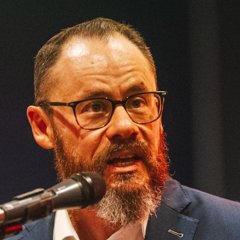
Daniel Gold is an attorney and a Principal at BDO USA, where he leads eDiscovery managed services. He co-hosts the NeLI Pod with Brandon Mack for the National eDiscovery Leadership Institute, hosts BDO's Legal Tech Talk and founded Gold Standard Leadership.
More about DanielGet the next one in your inbox
Daniel Gold writes weekly on leadership, legal technology and eDiscovery.
Subscribe on Substack